3/43 Daintree Dr, Redland Bay QLD 4165
Mon–Fri 7:30am–5:00pm

Automotive Refinishing Brisbane

The finish on a vehicle is not decoration. It's the final layer of a system that, when done correctly, protects metal from corrosion, survives UV exposure and maintains its appearance across years of use. At MRP Automotive Refinishing in Redland Bay, refinishing work is treated as a craft — not an afterthought at the end of a repair job.

Automotive refinishing is the end-to-end process of producing or restoring a painted finish on a vehicle or component. It covers surface preparation, primer selection and application, colour mixing and application, clear coat layering and final polishing. Every one of those stages affects the result — skip or rush any of them and the finish degrades faster, looks worse under direct light or fails to match the surrounding panels.

MRP Automotive Refinishing was built around this discipline. Refinishing quality is not a finishing touch — it's the reason the business exists and what the name reflects. Our Redland Bay workshop uses current paint systems, professional mixing equipment and a downdraft spray booth designed for consistent conditions across every job.

Refinishing Work We Do

From single panel refinishing to full vehicle finishing for restoration and repair projects.

Panel Refinishing

Refinishing a single panel or a set of panels is a precision job. The refinished area must match the adjacent surfaces in colour, gloss level and texture. This requires correct colour mixing, careful application technique and blending at panel edges. Refinishing done to a high standard leaves no visible boundary between the new work and the existing finish — which is the only acceptable outcome. We don't use shortcuts like rattle-can touch-up or uncalibrated colour mixes.

Paint Preparation

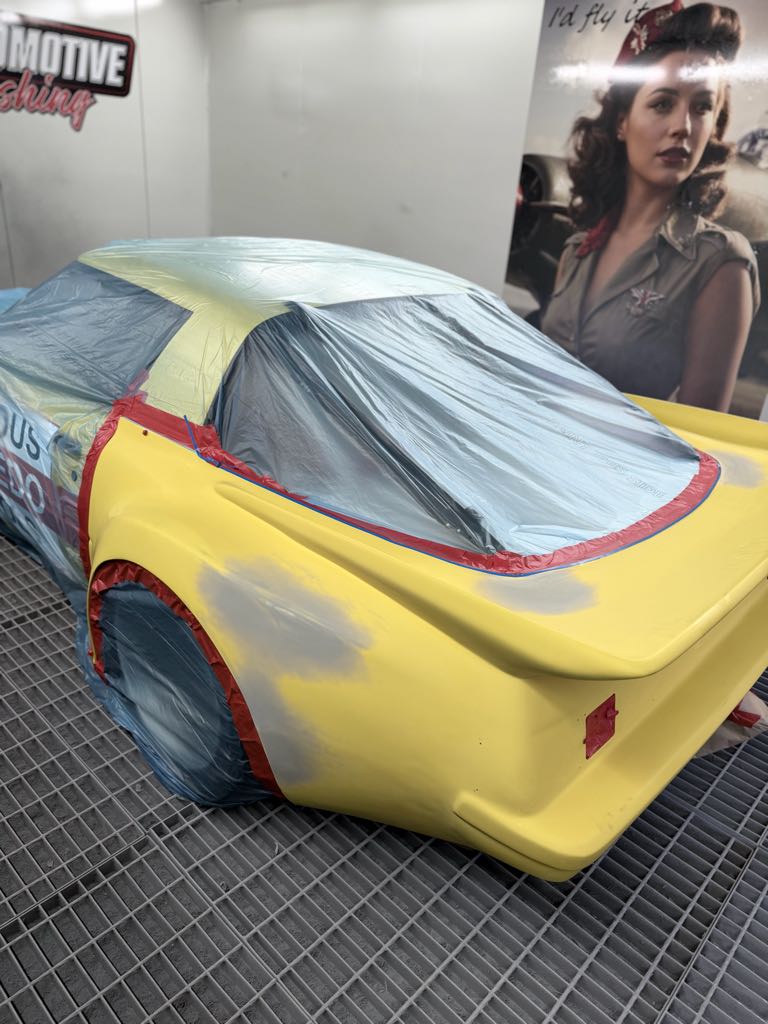
Preparation is the stage that determines whether a refinish lasts. This means sanding the existing surface to a profile that accepts primer — not just scuffing the surface and hoping for adhesion. It means checking for contamination, rust spots or previous repairs that need addressing before any primer is applied. It means building the primer coat correctly, blocking it flat and sealing it before colour. The result of proper preparation is paint that bonds fully, lays evenly and holds its finish for years rather than months.

Finish Quality Standards

Finish quality is assessed under controlled lighting before any vehicle leaves our workshop. We look for texture consistency — no orange peel, no dust nibs, no fish-eye inclusions. We check colour accuracy panel to panel in both natural and artificial light. We verify clear coat clarity and gloss level. Any imperfection that we identify gets corrected before handover, whether that means a machine polish or a panel correction. The standard doesn't change based on the job size.

Refinishing for Repairs and Restoration

Accident and smash repairs are not complete until the refinishing is done correctly. Structural work that's returned a panel to correct geometry means nothing if the finish over it is inconsistent with the rest of the vehicle. Similarly, restoration work on a classic or heritage vehicle deserves refinishing that reflects the care invested elsewhere in the project. We apply the same preparation and application standards to post-repair refinishing as we do to a dedicated respray — because the end result has the same visibility.

Why Standards Matter in Refinishing

Consistency Panel to Panel

A refinished panel that sits slightly lighter, darker or with a different flop angle than its neighbour is visible from any angle in daylight. Colour mixing, batch verification and controlled application are what prevent this.

Durability Over Time

Paint that's been applied over poorly prepared surfaces degrades faster. Clear coat that hasn't cured properly chips more easily. The way refinishing is done at the start determines how the finish holds over months and years.

The Environment Makes the Difference

Dust, inconsistent temperature and poor airflow are visible in the finished paint. A downdraft booth provides controlled conditions that make a professional finish achievable and repeatable. There's no way to produce consistent refinishing results in an uncontrolled environment.

Assessed Before It Leaves

We inspect every job before the vehicle is returned. If something doesn't meet standard — in gloss, texture or colour — we correct it. A refinish that's sent out with visible defects reflects on everything we do.

Frequently Asked Questions

What does automotive refinishing actually mean?
Automotive refinishing is the process of restoring or replacing the painted finish on a vehicle or panel. It encompasses surface preparation, primer application, colour coat application and clear coat finishing. It applies equally to post-repair panel work, full resprays and restoration projects — anywhere a final painted surface needs to be correctly produced.
How do you ensure the refinished panel matches the rest of the car?
We use your vehicle's paint code as the starting reference and mix the colour using a computerised formula system. Before application, we verify the mix under controlled lighting conditions against the existing paint. Where an exact batch match isn't possible due to age-related colour shift, we adjust the formula and blend at panel edges to ensure the transition is invisible.
Why does finish quality vary between repair shops?
Finish quality is almost entirely determined by preparation and environment. Paint applied in an uncontrolled environment picks up dust, debris and inconsistent airflow — all of which show in the finished surface. Equally, paint over an improperly prepared surface will show texture problems, adhesion failure or colour inconsistency. The standard of preparation and the quality of the spray environment are where results are made or lost.
Do you refinish panels after accident or smash repairs?
Yes. Panel refinishing after smash and accident repairs is a core part of our work. Once structural repairs are complete and panels are returned to correct profile, we prepare and refinish them as part of the job. The structural repair and the refinished finish are handled under the same roof with consistent quality standards throughout.
Can you refinish just one panel without affecting the rest of the vehicle?
Yes. Single-panel refinishing is common and handled with careful masking and edge blending. Adjacent panels and trim are fully protected during the process. Blending into neighbouring panels at the edges ensures the refinished area doesn't sit as a visible patch against the surrounding original paint.

Talk to Us About Refinishing

Describe what you need — a single panel, a full vehicle or restoration work — and we'll give you an honest assessment. MRP Automotive Refinishing, Redland Bay.

3/43 Daintree Dr, Redland Bay QLD 4165 — Mon–Fri 7:30am–5:00pm
Call Now Get a Quote