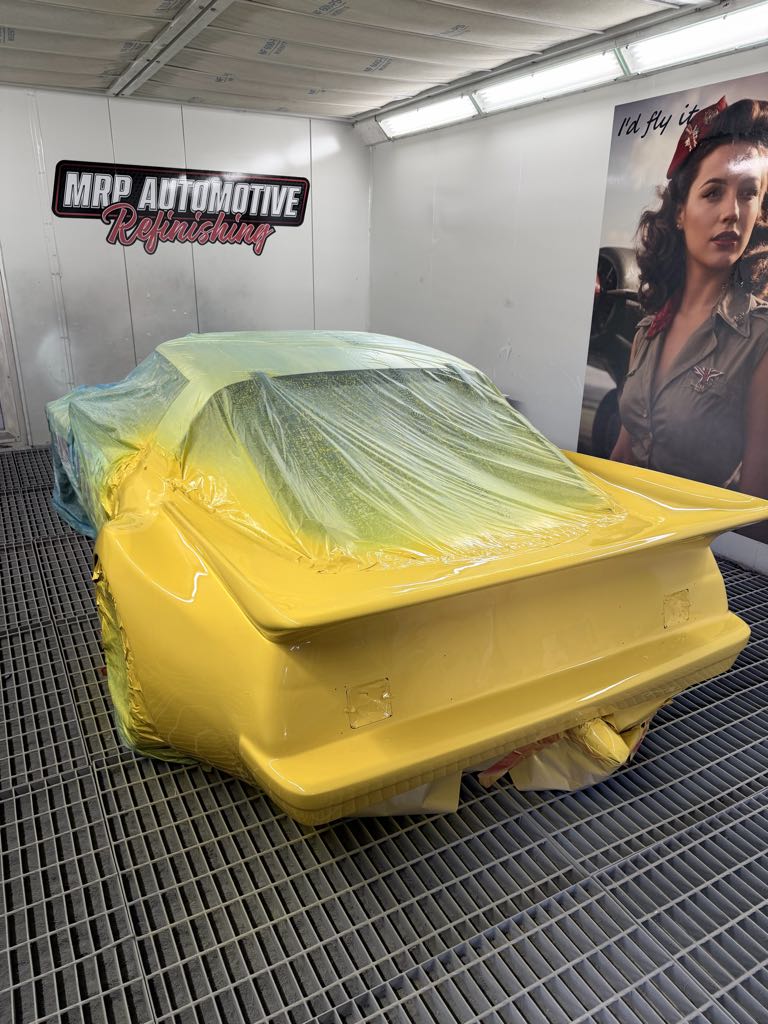
The Short Answer: 2026 Price Ranges
These are broad market ranges for Australia in 2026, drawn from what quality workshops charge and what the cheap end of the market advertises. Treat them as a starting point, not a quote — the condition of your car's existing paint and bodywork moves the number more than anything else.
| Job | Typical range (AU) |
|---|---|
| Single panel respray | $300 – $1,000 |
| Bumper respray | $350 – $950 |
| Bonnet or roof | $450 – $1,200 |
| Partial respray (several panels, blended) | $1,000 – $3,500 |
| Full respray — budget end | $3,500 – $6,000 |
| Full respray — quality, with proper preparation | $6,000 – $12,000 |
| Colour change or show-standard finish | $12,000 – $30,000+ |
If a number in that table made you wince, keep reading — the difference between the budget end and the quality end isn't margin, it's hours. Most of a respray happens before any colour is sprayed.
What Actually Drives the Price
1. Preparation — the biggest line item
On a proper respray, preparation is most of the labour. Old clear coat has to be assessed and either keyed back or stripped. Dents, stone chips, rust and previous bad repairs all have to be corrected — paint magnifies surface flaws rather than hiding them. Cars that need panel beating before paint sit at the upper end of every range above.
2. The paint system
Solid colours are the cheapest to shoot. Metallics, pearls and tri-coats cost more in both materials and skill — they need careful, even layering to avoid patchiness, and a colour-matched blend into adjacent panels on partial work. Two-pack systems sprayed in a proper booth cost more than acrylic sprayed in a shed, and last decades longer.
3. Same colour or colour change
Respraying in the original colour means door jambs, engine bay and boot interior can often stay untouched. A colour change done properly includes all of those — which is why it can add thousands to the job. A colour change that skips the jambs is visible every time a door opens.
4. Vehicle size and type
A dual-cab ute or large SUV simply has more surface area than a hatchback, and specialty vehicles — classics, race cars, restorations — bring their own preparation demands. Restoration paintwork is really its own category; see our car restoration work for what's involved when a vehicle is taken back to bare metal.
5. The standard you're aiming for
A tidy daily-driver finish and a mirror-flat show finish are different jobs with different hours. Cut-and-polish to a show standard can add days of labour after the booth. Be clear with your shop about which one you're paying for.
The rule of thumb: a respray is roughly 80% preparation and 20% paint. When a quote is dramatically cheaper than the others, preparation is almost always what's been removed.
Why the Cheapest Quote Usually Costs More Later
We regularly see the results of budget resprays a few years on. The failure modes are predictable:
- Peeling and delamination — colour sprayed over unkeyed or contaminated surfaces doesn't bond, and lifts at edges and stone-chip points.
- Overspray on trim and glass — masking is slow, careful work; skipping it leaves paint on rubbers, mouldings and window edges.
- Panel-to-panel mismatch — colour that wasn't blended or verified under proper lighting reads as a different shade on different panels.
- Dust and orange peel in the finish — paint applied outside a filtered booth traps airborne contamination that no polish fully removes.
Fixing a failed respray means paying for the job twice — the second time with the added labour of removing the first attempt. That's the real cost of the cheap quote.
Full Respray or Partial?
If the damage or fade is limited to a few panels, a partial respray with edge blending is often the sensible spend — you pay for the panels that need work, and a good painter makes the join invisible. Once fade, clear-coat failure or previous poor repairs spread across most of the car, a full respray stops being a luxury and becomes the only way to get a uniform result.
An honest shop will tell you which side of that line your car sits on before quoting.
Does Insurance Ever Cover Respray Work?
Only when the paint damage is part of an insurable event — a collision, vandalism, hail or similar. General fade and wear aren't claimable. If your paintwork was damaged in an incident, the repair usually runs through your insurer as part of the broader insurance repair process rather than as a standalone respray.
Getting an Accurate Price
Any figure quoted sight-unseen — including everything in this guide — is an estimate. An accurate respray price needs eyes on the car: the state of the existing paint, what's under it, and what finish you're after. Photos are a good start; an in-person inspection is better.
If you're in Brisbane, the Redlands or the southside, send us a few photos or book the car in — we'll give you a straight answer on what it needs and a written quote for exactly that. No obligation, no upselling.