The Short Answer: 2026 Price Ranges
These are broad Australian market ranges for 2026. Dent and scratch pricing swings on damage depth more than size — a long shallow mark can cost less to fix than a small deep one. A real price needs eyes on the damage, which is why our dent and scratch repair quotes start with photos rather than guesses.
| Job | Typical range (AU) |
|---|---|
| Single small dent, paint intact (mobile PDR) | $100 – $250 |
| Several dents on one panel, paint intact (PDR) | $200 – $500 |
| Clear-coat scratch, machine polish | $100 – $300 |
| Scratch through colour, spot repair + blend | $300 – $700 |
| Dent with broken paint, repair + refinish | $400 – $900 per panel |
| Deep crease or stretched metal, repair + refinish | $500 – $1,200 |
| Keyed or scraped along multiple panels | $1,200 – $4,000+ |
Two quotes for the same scratch can honestly differ by three or four times — because they are quoting different repairs. One repairer plans to polish the clear coat; the other has spotted that the scratch goes deeper and is quoting to refinish the panel. Knowing which repair your damage needs is most of knowing whether a price is fair.
How Deep Does It Go? The Test That Sets the Price
Modern automotive paint is a stack: a thin clear coat over the colour layer, over primer, over the steel or plastic of the panel itself. Where the damage stops in that stack decides almost everything about cost.
Clear coat only. If a scratch hasn't broken through the clear layer, machine polishing can level the surrounding surface and make it disappear. This is the cheapest, fastest outcome — and the one every owner hopes for.
Through the colour. A scratch that shows white, grey or a different colour has cut past the clear into the base coat or primer. Polishing can't rebuild missing paint — it only rounds the scratch's edges. The panel needs a spot repair: prepared, primed where required, colour-matched and blended.
To the metal. Bare steel starts corroding quickly in Queensland humidity. What looks like a cosmetic line becomes a rust repair if it's left through a wet season — which multiplies the cost well past what the original refinish would have been.
The fingernail test: drag a fingernail across the scratch. If it glides over, polishing is probably enough. If it catches, the scratch is through the colour and the panel needs paint — no polishing compound changes that.
Mobile Repairer or Panel Shop?
Minor damage is contested ground between mobile services and workshops, and the honest answer is that each wins different jobs.
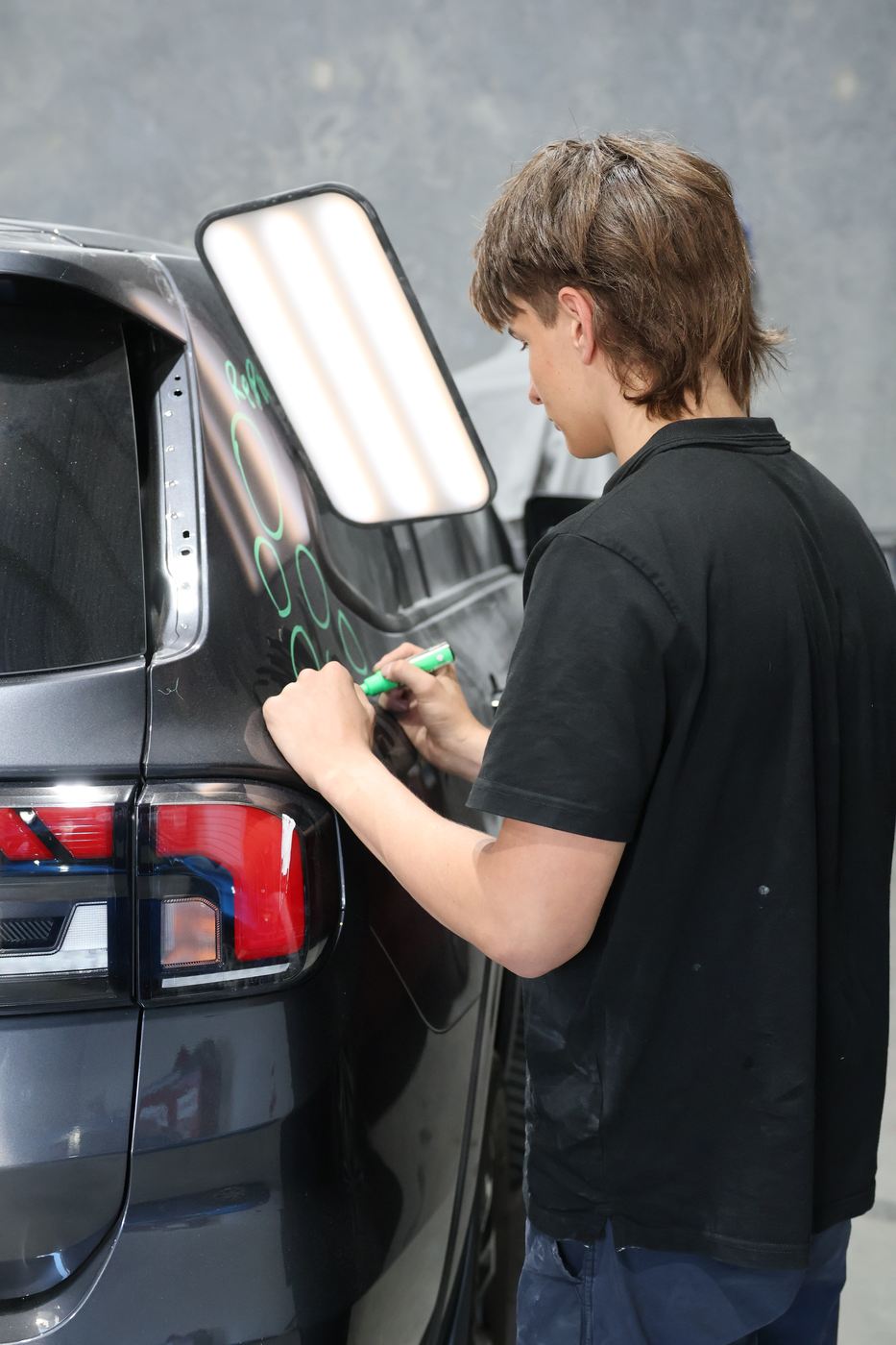
Mobile services win on shallow dents with intact paint — classic car park dings on flat sections of a door or guard — where paintless dent repair (PDR) can massage the metal back in your driveway for a fraction of a refinish. Small, low-visibility scuffs can also suit mobile touch-up services when the standard required is tidy rather than invisible.
The panel shop wins once paint is broken, metal is creased or the damage touches edges and body lines. It wins on plastic bumpers, where flex and texture punish shortcuts. And it wins whenever colour is critical: metallics and pearls need blending into the adjacent panels under booth conditions to read as one colour in sunlight — something no open-air repair can guarantee. Multi-panel damage and resale-standard work belong in a booth as well.
Our own work at MRP Automotive Refinishing is conventional repair and refinishing — panel repair, proper preparation, colour-matched paint and blending in a controlled booth. When a dent lands in genuine PDR territory, we'll say so at assessment rather than quote paintwork the damage doesn't need. When the paint is broken, no dent tool fixes it — and that's when the booth earns its keep.
What Moves the Price
1. Depth and size
Depth dominates the price; size mostly decides how many panels are involved. A deep 3 cm chip can cost more to put right than a shallow 30 cm scuff, because one needs refinishing and the other needs polishing.
2. The panel and its material
A flat steel door is the easy case. Aluminium bonnets need different repair technique, and plastic bumpers are their own economics entirely — flexible substrate, texture zones and parking sensors — which is why we've covered them separately in our bumper repair cost guide.
3. Paint type and colour
Solid colours are the cheapest to repair. Metallics and pearls need blending into neighbouring panels for an invisible result, which adds time and material. Tri-coat finishes — many whites and deep reds — are the hardest to match and sit at the top of every range.
4. Where on the panel
Damage on a flat centre section is straightforward. The same damage across a panel edge, crease or character line takes more skill to reshape and more care to refinish, and prices accordingly.
Claim It or Pay Privately?
Minor dent and scratch damage is the classic excess-zone repair. With single-panel repairs commonly landing between $300 and $900 and typical comprehensive excesses sitting in the $600 to $1,000 band, claiming often saves little immediately — and can cost you at renewal. Get a written quote, set it against your excess, and weigh the premium effect before lodging anything. For damage across multiple panels — a keyed car, a scrape along a whole side — the numbers usually push the other way and a claim makes sense. Our insurance repairs page covers how we document damage and support claims either way.
Why the Cheap Fix Costs More Later
- Touch-up pens — a blob of near-match colour sitting proud of the surface is often more visible than the chip it covers, and it has to be sanded off before a proper repair can start.
- Over-polishing — clear coat is thin. Aggressive cutting to chase a deep scratch burns through at panel edges and swirls the surface, turning a $200 polish into a $700 refinish.
- No blend on metallics — a panel painted in isolation reads a shade off against its neighbours in sunlight. Correct repairs blend colour into the adjacent panels.
- Filler over broken paint — skimming over a cracked chip seals nothing. Moisture gets underneath, the repair lifts, and rust follows.
Minor damage tempts minor fixes. The test of a repair isn't how it looks the day it's done — it's how it looks after two Queensland summers.
Getting an Accurate Price
Every figure above is a market range, not a quote for your car. Damage depth, panel, paint and access decide the real number — and all four are visible in a few clear photos. If your car has picked up a dent, a scratch or a car park scrape around Brisbane, the Redlands or the Southside, send us photos through the contact form and we'll come back with a written quote and a straight answer on the right repair, usually within one business day.